
Have you ever received a message containing MMS and wondered what it means? You’re not alone. Online conversations move fast, and texting slang, internet abbreviations, and social media acronyms appear everywhere. Whether you’re chatting on Snapchat, scrolling through TikTok comments, using WhatsApp, or reading Instagram chat terms, understanding modern communication shortcuts helps you stay connected.
Many people assume MMS is just another piece of Gen Z slang, but its meaning is actually tied to mobile messaging technology. Depending on the platform and context, MMS can refer to different things, which often causes confusion for new users.
This guide explains everything you need to know about MMS, including its exact definition, how it’s used across platforms, texting examples, alternative terms, common misunderstandings, and answers to frequently asked questions. By the end, you’ll know exactly what MMS means and when to use it in online messaging.
What Does MMS Mean in Text?
The term mms meaning in text usually refers to Multimedia Messaging Service.
MMS is a mobile messaging format that allows users to send content beyond plain text messages. Unlike standard SMS (Short Message Service), MMS supports:
- Photos
- Videos
- Audio clips
- GIFs
- Contact cards
- Longer messages
- Multimedia attachments
When someone says they sent an MMS, they typically mean they sent a message containing media rather than only text.
For example:
- “I couldn’t send the picture through SMS, so I sent it as an MMS.”
- “Check your phone. The video came through as an MMS.”
In most cases, MMS is a technical messaging term rather than a casual texting phrase.
The Full Form of MMS
MMS stands for:
Multimedia Messaging Service
It was developed as an extension of SMS to make mobile communication more interactive.
Before internet-based messaging apps became popular, MMS was one of the primary ways people shared:
- Family photos
- Holiday pictures
- Voice recordings
- Short videos
Today, apps like WhatsApp, Snapchat, Messenger, and Instagram provide similar multimedia sharing features, but the term MMS is still widely used in mobile networks.
Key differences include:
FeatureSMSMMSText OnlyYesYesImagesNoYesVideosNoYesAudio FilesNoYesGIFsNoYesCharacter LimitLowerHigher
How MMS Is Used in Modern Messaging
Although messaging apps dominate online communication, MMS still appears regularly in digital conversations.
People may use the abbreviation when discussing:
- Phone messaging settings
- Mobile carrier services
- Multimedia delivery
- Group texts
- Photo sharing
Examples:
- “Turn on MMS messaging in your settings.”
- “My MMS messages aren’t sending.”
- “The image was too large for SMS, so it became an MMS.”
Unlike many internet abbreviations, MMS is not usually used as an emotional reaction or slang expression. Instead, it describes a messaging method.
MMS Meaning on Different Platforms
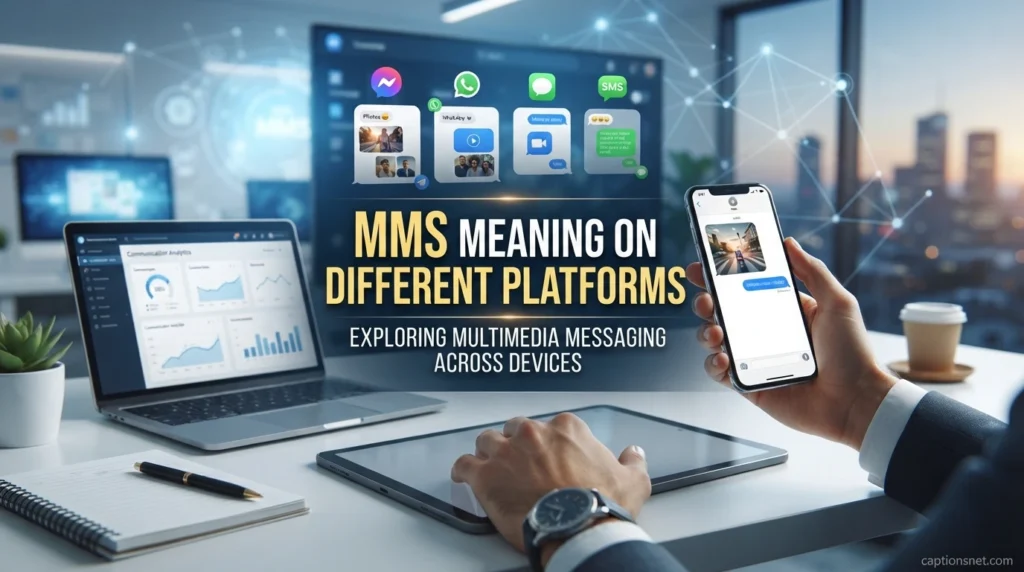
The meaning of MMS remains largely consistent across platforms, but how users encounter it can vary.
WhatsApp doesn’t technically use MMS for media sharing because messages travel through the internet.
However, users may compare MMS with WhatsApp messages when discussing:
- Photo sharing
- Video sending
- Messaging costs
- Carrier limitations
Example:
- “Using WhatsApp is easier than sending MMS.”
Snapchat
On Snapchat, MMS is rarely used directly inside chats.
Instead, users might mention MMS when comparing traditional messaging with Snapchat’s multimedia features.
Example:
- “Why send an MMS when you can snap a picture?”
TikTok
TikTok creators occasionally discuss MMS in technology or phone-related content.
The term usually appears when comparing:
- Old mobile communication
- Modern social media messaging
- Evolution of texting
Instagram chat terms focus mainly on DMs.
However, MMS may appear in conversations about sharing media through mobile networks versus social apps.
Example:
- “Send it through Instagram instead of MMS.”
iPhone and Android Messaging
This is where MMS appears most often.
Users commonly discuss:
- MMS settings
- MMS errors
- MMS downloads
- Group messaging
- Photo delivery issues
Texting Examples Using MMS
Understanding context is the easiest way to learn any internet abbreviation.
Here are some realistic texting examples:
Example 1
Person A: Can you send me the picture?
Person B: Sure, I’ll send it as an MMS.
Example 2
Person A: Why didn’t the video come through?
Person B: Your MMS settings might be disabled.
Example 3
Person A: I only received the text.
Person B: The photo was attached as an MMS.
Example 4
Person A: Can SMS send pictures?
Person B: No, you’ll need MMS.
Example 5
Person A: My group chat isn’t working.
Person B: Group texts usually require MMS messaging.
These examples show that MMS functions more as a technical communication term than social slang.
When Should You Use MMS?
You should use the term MMS when discussing multimedia mobile messages.
Appropriate situations include:
- Talking about phone messaging features
- Troubleshooting message delivery
- Sharing photos through cellular networks
- Discussing mobile carrier services
- Explaining differences between SMS and multimedia messages
Examples:
- “Enable MMS in your phone settings.”
- “The image was sent through MMS.”
- “My carrier charges extra for MMS.”
Using the term correctly makes communication clearer, especially when discussing messaging technology.
When Not to Use MMS
Because MMS is not a typical Gen Z slang expression, there are situations where using it may sound confusing.
Avoid using MMS:
- As a reaction
- As an emotion
- As a greeting
- As a replacement for common texting slang
- In contexts unrelated to messaging
Incorrect examples:
- “MMS, that’s funny.”
- “I’m feeling MMS today.”
- “MMS lol.”
These usages don’t match the accepted meaning of the abbreviation.
Instead, reserve MMS for discussions involving multimedia messages.
Alternative Terms and Related Texting Slang

While MMS has a specific meaning, several related terms appear in online messaging.
SMS
Short Message Service
Refers to standard text-only messages.
DM
Direct Message
Private communication on social media platforms.
PM
Private Message
Another term for one-on-one messaging.
Chat
A general word for digital conversation.
Message
The most common term for communication through apps or mobile devices.
Media Message
Some users casually describe MMS messages as media messages because they contain photos, videos, or audio.
Attachment
In messaging apps, attached media files often serve the same purpose as MMS content.
Understanding these related terms helps users navigate modern online messaging more effectively.
Common Misunderstandings About MMS
Many people misunderstand MMS because internet language evolves quickly.
Here are some common misconceptions.
MMS Is Gen Z Slang
Not true.
MMS is a messaging technology term rather than a trendy social media acronym.
MMS Means the Same Thing as SMS
Incorrect.
SMS handles text messages only, while MMS supports multimedia content.
MMS Only Sends Pictures
Not exactly.
MMS can also send:
- Videos
- Audio
- GIFs
- Contact information
- Multimedia files
MMS Is Obsolete
While internet messaging apps are more popular, MMS remains active on many mobile networks worldwide.
MMS Requires Wi-Fi
No.
Traditional MMS messages usually work through cellular network services rather than Wi-Fi.
Recognizing these distinctions helps avoid confusion when discussing messaging features.
Why MMS Still Matters Today
Many people assume multimedia messaging disappeared after the rise of social media apps. However, MMS remains relevant for several reasons.
Businesses use MMS to send:
- Promotional images
- Appointment reminders
- Product photos
- Marketing campaigns
Individuals use MMS for:
- Sharing pictures with non-app users
- Sending media without downloading apps
- Communicating across different phone types
Mobile carriers continue supporting MMS because it provides a universal way to exchange multimedia content.
Even though online messaging apps dominate daily communication, MMS still plays an important role in digital communication systems.
FAQs
What does MMS stand for?
MMS stands for Multimedia Messaging Service.
Is MMS a texting slang term?
No. MMS is a technical messaging abbreviation rather than casual slang.
Can MMS send pictures?
Yes. MMS supports pictures, videos, audio files, GIFs, and other multimedia content.
What’s the difference between SMS and MMS?
SMS sends text-only messages, while MMS can include multimedia attachments.
Is MMS free?
It depends on your mobile carrier and service plan. Some providers include MMS in standard messaging packages, while others may charge separately.
Does WhatsApp use MMS?
No. WhatsApp uses internet data rather than traditional MMS technology.
Why won’t my MMS messages send?
Common causes include:
- Disabled MMS settings
- Weak cellular signal
- Carrier restrictions
- Data connection issues
Is MMS still used today?
Yes. Many users and businesses still rely on MMS for multimedia communication.
Can Android and iPhone both use MMS?
Yes. MMS works across most modern smartphones and mobile networks.
Does MMS require mobile data?
In many cases, yes. Mobile data is often needed for sending and receiving MMS content.
Conclusion
MMS stands for Multimedia Messaging Service, a mobile messaging technology that allows users to send photos, videos, audio clips, GIFs, and other multimedia content through cellular networks. While many people encounter the term in texting, it is not a piece of Snapchat slang, TikTok meaning, or Gen Z slang in the traditional sense. Instead, it is a practical communication term used in mobile messaging.
Understanding MMS helps users distinguish between SMS and multimedia messages, troubleshoot messaging issues, and communicate more effectively across different devices and platforms. Whether you’re using WhatsApp, Instagram, Snapchat, or standard phone messaging, knowing how MMS works makes modern online communication easier to understand and navigate.