
Seeing GMFU in a text can feel like being handed four mysterious letters and expected to understand the entire emotion behind them. If someone suddenly sends “GMFU” after your message, you may wonder whether they are joking, annoyed, shocked, offended, or genuinely angry. You are not alone—texting slang often compresses an entire reaction into a few letters, leaving the reader to figure out the feeling from context.
The gmfu meaning in text is usually connected with the slang phrase Got Me F*ed Up**, a strong and highly informal expression used to communicate disbelief, frustration, annoyance, shock, or feeling disrespected. The exact tone can change dramatically depending on who says it, what happened before it, and whether emojis or joking language are included.
This guide explores the expression from every useful angle, including its meaning, emotional tone, texting examples, social-media usage, possible interpretations, appropriate responses, and situations where it is better to choose gentler language.
What Does GMFU Mean in Text Messages?
- GMFU usually expresses a strong emotional reaction. 😮
- The abbreviation commonly represents Got Me F***ed Up. 💬
- It can communicate disbelief when something seems unbelievable. 🤯
- It can express frustration when someone has become irritating. 😤
- It may signal that a person feels disrespected. 🫤
- It can mean that someone cannot believe what just happened. 😳
- Friends may use it humorously during playful conversations. 😂
- The expression is strongly informal rather than professional. 🗣️
- Its emotional strength comes partly from the profanity in the original phrase. 🔥
- A single GMFU can sometimes communicate an entire paragraph of frustration. 📝
- The abbreviation is generally used in casual digital communication. 📱
- Context determines whether the expression sounds playful or serious. 🧩
- A laughing emoji can make the phrase feel more humorous. 😭
- An angry emoji can make the same abbreviation sound more serious. 😡
- A sender may use it after receiving an unreasonable request. 🙃
- Someone might type it after hearing unexpected news. 🫢
- It can react to a person’s behavior rather than directly insult them. 🤝
- It may describe a frustrating situation rather than another individual. 🌧️
- The phrase is better understood as emotional shorthand than literal language. 💡
- If you are unsure, the surrounding conversation provides the safest interpretation. ❤️
The gmfu meaning in text is therefore best understood as a reaction rather than a simple vocabulary word. People use it when ordinary expressions such as “I cannot believe this” or “Are you serious?” do not seem strong enough.
GMFU Slang Definition and Full Form
- The G generally represents the word Got. 🔤
- The M represents Me. 🧠
- The F represents a profanity beginning with F. ⚡
- The U represents Up. ⬆️
- Together, the letters shorten a familiar slang expression. 🧩
- The complete phrase has a deliberately strong emotional flavor. 🌶️
- People often abbreviate it to avoid typing the profanity. 🙈
- Some writers use GMFU instead of spelling out the phrase. ✍️
- Others use censored forms such as G-M-F-U. 🛡️
- Lowercase gmfu can look more relaxed in casual texting. 😌
- Uppercase GMFU can visually emphasize intensity. 📢
- The capitalization itself does not create a different dictionary meaning. 📖
- The expression generally communicates a reaction to something. 💭
- It can suggest that someone has pushed another person’s patience. 😮💨
- It can communicate disbelief without requiring a long explanation. 🗯️
- It may be directed toward a person or a situation. 👥
- The phrase is not normally appropriate for formal writing. 🚫
- Its strongest meanings involve frustration, disbelief, or offense. 💥
- Playful friendships can soften its emotional force. 🫶
- Context remains more important than the four letters themselves. 🌟
In simple language, if somebody sends GMFU, they are often communicating something close to “You cannot be serious,” “You have got me messed up,” “I cannot believe this,” or “That is really bothering me.” The intended interpretation depends on the surrounding conversation.
GMFU Texting Meaning and Emotional Tone
- The expression can sound annoyed. 😠
- It can sound surprised. 😲
- It can sound offended. 😒
- It can sound shocked. 😱
- It can sound disappointed. 😔
- It can sound dramatically humorous. 🤣
- It can sound teasing among close friends. 😜
- It can sound confrontational during an argument. 🥊
- It can communicate emotional exhaustion. 😩
- It may show that someone’s patience has been tested. 🫠
- It can emphasize that a situation feels unreasonable. ⚖️
- It can indicate disbelief at an unexpected statement. 👀
- It can react to an unfair demand. 🙅
- It can respond to an embarrassing moment. 😬
- It may accompany a funny complaint. 😆
- It can show that someone feels personally affected. 💔
- The same abbreviation can have different emotional levels. 🎚️
- Emojis often provide clues about the intended mood. 🔍
- Relationship history can change how the phrase is received. 👫
- Reading the complete conversation prevents unnecessary misunderstandings. 🌈
One reason this slang can be confusing is that the same four letters can sound playful in one conversation and aggressive in another. A close friend saying “you GMFU 😂” after you steal their fries may be joking. A person using the same expression during a serious disagreement may be expressing genuine frustration.
GMFU Phrase Meaning in Everyday Chats
- People often use the phrase as a quick reaction. ⚡
- It can replace a longer emotional sentence. 🗨️
- Someone may send it immediately after surprising news. 📩
- It can appear as a standalone reply. 📱
- It can also appear inside a longer sentence. ✏️
- Friends may use it to exaggerate minor problems. 🎭
- Someone might react to an unexpectedly expensive bill. 💸
- A person could use it after a friend cancels plans. 📅
- It may appear after an unreasonable request. 🙄
- Someone might type it after hearing ridiculous gossip. 👂
- It can react to an unexpected plot twist. 🎬
- It can describe an irritating everyday inconvenience. 🚌
- A sender may use it after being left waiting. ⏳
- It can express frustration about changing plans. 🔄
- Someone may use it when another person crosses a boundary. 🚧
- The abbreviation can make a reaction feel immediate. ⚡
- It often appears naturally in casual group chats. 👨👩👧👦
- It can add humor to exaggerated complaints. 🎉
- It is generally understood through social context. 🧠
- Its meaning becomes clearer when you read the surrounding messages. 🔎
For example, imagine a friend says, “They increased the delivery charge again.” A reply of “GMFU 😭” could communicate disbelief and humorous frustration. In another conversation, “You really expect me to apologize after that? GMFU” would likely carry a much more serious tone.
GMFU Definition on Snapchat, TikTok, and Instagram
- Snapchat conversations often use highly informal abbreviations. 👻
- GMFU can appear in private Snapchat messages. 💬
- TikTok comments may use it as a reaction to surprising content. 🎥
- Instagram users may place it in captions or replies. 📸
- Group chats can use it as a quick collective reaction. 👥
- Social-media posts can make slang spread rapidly. 🌐
- Short abbreviations fit naturally into fast-moving comment sections. ⚡
- The meaning generally remains consistent across platforms. 🔄
- The emotional tone can change according to the post. 🎯
- A funny video may encourage a playful interpretation. 😂
- A serious personal story can produce a more sympathetic reaction. 🫂
- Relationship discussions may make the expression sound stronger. ❤️🩹
- A meme can use GMFU for dramatic comedic effect. 🤣
- Public comments can make the phrase feel more noticeable. 👀
- Private messages may make it feel more personal. 🔐
- The surrounding emojis can reveal the sender’s mood. 😊
- Punctuation can also affect how intense it feels. ❗
- Repeated letters may add dramatic emphasis. 😭
- Different communities may use slang slightly differently. 🌍
- Context should always be considered before interpreting the phrase. 🧭
Current slang references describe GMFU as a strong reaction expression that appears across texts and social platforms, while emphasizing that context determines whether the phrase is humorous, irritated, or confrontational.
GMFU Acronym Meaning When Someone Is Joking
- Close friends may use GMFU without serious anger. 😄
- Humor can make a strong phrase feel lighter. 🎈
- A laughing emoji may soften the reaction. 😂
- A crying emoji can signal exaggerated amusement. 😭
- Friends sometimes dramatize tiny inconveniences for fun. 🍟
- Someone stealing fries might inspire a playful response. 🍔
- A friend borrowing clothes can become a joking complaint. 👕
- Losing a game can prompt exaggerated frustration. 🎮
- An unexpected punchline can trigger playful disbelief. 🤣
- A funny surprise can make the abbreviation entertaining. 🎁
- Inside jokes can make the expression feel affectionate. 🫶
- Long friendships often provide extra context. 🤝
- Teasing can make the expression less confrontational. 😜
- A familiar conversational style may soften strong slang. 🌸
- Humor can completely change how four letters feel. 🎭
- The sender may not intend genuine offense. 💛
- Playful exaggeration is common in casual digital speech. 🎉
- Friends may use profanity casually without hostile intent. 🗣️
- The recipient should consider the relationship before reacting. 🧡
- A gentle reply can keep the joke moving naturally. 🌻
For instance, your friend might write, “You ate my last cookie? GMFU 😂.” They may not genuinely be angry. Instead, the abbreviation adds dramatic humor to an otherwise harmless complaint.
GMFU Text Slang When Someone Is Angry
- GMFU can carry genuine irritation. 😤
- It may appear after repeated disrespect. 🚨
- Someone may use it after feeling ignored. 🥀
- It can express frustration during an argument. 🔥
- The phrase may indicate that patience is running low. ⏰
- A serious message before GMFU can increase its intensity. 📌
- An angry emoji can reinforce a confrontational reading. 😡
- A period can make a short response feel firm. 🛑
- Repeated use may suggest escalating frustration. 📈
- The expression can challenge unreasonable behavior. ⚠️
- It may communicate that a boundary has been crossed. 🚧
- Someone might use it after being treated unfairly. ⚖️
- It can accompany disappointment in someone’s actions. 💔
- The phrase can signal that an apology may be expected. 🙏
- It may indicate that the sender needs space. 🌙
- Responding defensively can make the disagreement worse. 🌪️
- Calm communication can help clarify the intended meaning. 🕊️
- Asking what happened can prevent unnecessary assumptions. ❓
- Tone should be interpreted alongside the complete message. 🧩
- Respectful responses can lower emotional tension. 🌿
When GMFU appears during a genuine disagreement, it is safer to treat the message as emotionally significant rather than automatically assuming it is a joke. The phrase is considered stronger than milder reaction slang such as SMH.
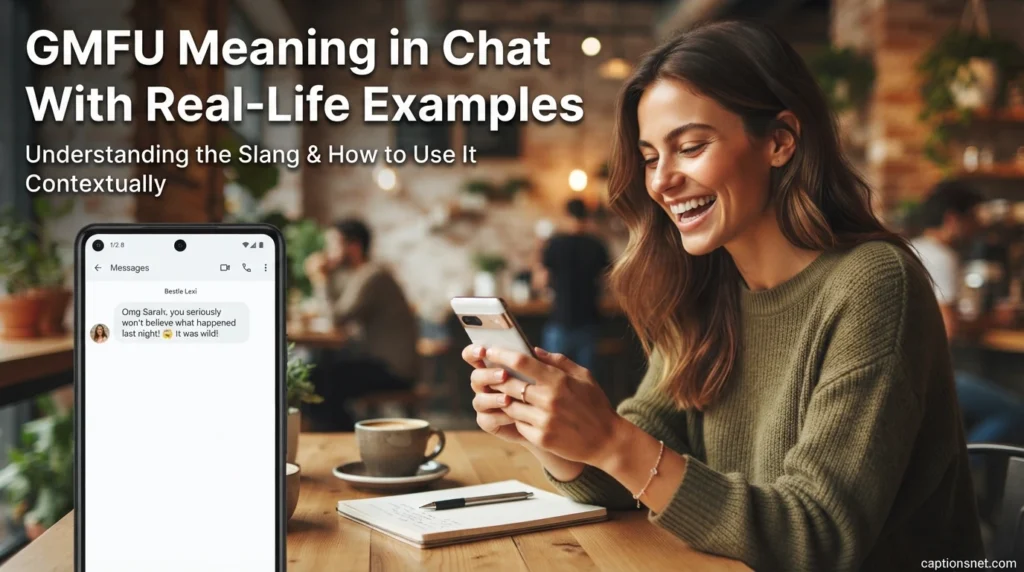
GMFU Meaning in Chat With Real-Life Examples
- A friend cancels dinner at the last minute, and you react with GMFU. 🍽️
- Someone charges an unexpectedly high delivery fee, and you express disbelief. 💳
- Your friend eats the food you saved, creating a playful complaint. 🍕
- A coworker changes plans without warning, creating frustration. 📋
- Someone tells you an unbelievable story, prompting a shocked reaction. 😮
- A friend asks for another favor after ignoring your previous help. 🙃
- Your favorite team loses in an unexpected way, creating dramatic frustration. 🏆
- A website crashes just before you finish an important task. 💻
- Someone sends a ridiculous screenshot into a group chat. 📸
- Your friend reveals an unexpected secret, leaving you stunned. 🤫
- A restaurant bill turns out much higher than expected. 🧾
- Someone changes the agreed meeting time repeatedly. 🕒
- A friend makes an outrageous joke that catches you off guard. 🎤
- You discover that your package has been delayed again. 📦
- Someone makes an unreasonable demand and you strongly object. 🙅♀️
- A movie ending surprises you completely. 🎬
- Your plans are ruined by unexpected weather. 🌧️
- Someone misunderstands your message and creates unnecessary drama. 🫣
- A close friend teases you about something embarrassing. 😅
- An absurd situation leaves everyone in the group chat stunned. 🤯
The gmfu meaning in text becomes much easier to understand when you place it inside an actual conversation. The letters themselves provide only the basic expression; the event surrounding them supplies the emotional details.
GMFU Slang Meaning Compared With Similar Expressions
- GMFU is generally stronger than a simple “wow.” 😮
- It often carries more frustration than “SMH.” 🤦
- “Seriously?” can communicate similar disbelief more gently. 🧐
- “Are you kidding me?” can express surprise without the acronym. 😯
- “No way” can communicate disbelief in a softer form. 🙅
- “That is crazy” can work when the situation is surprising. 🤯
- “I cannot believe this” is clearer for mixed audiences. 🗣️
- “You have got to be kidding” can sound dramatic without profanity. 🎭
- “That is ridiculous” communicates criticism directly. 📢
- “What just happened?” is more neutral. ❓
- “Wow, really?” can work in polite conversations. 🌷
- “Come on” may express mild frustration. 😮💨
- “That is wild” can communicate surprise casually. 🌪️
- “No shot” can sound youthful and playful. 🎮
- “For real?” can express disbelief with less intensity. 🤨
- “Seriously though” can introduce a genuine concern. 💭
- “I am annoyed” directly states the emotion. 😑
- “That really bothered me” is clearer during serious discussions. 🫶
- “I did not appreciate that” is more respectful for conflict. 🤝
- Choosing a softer alternative can prevent misunderstandings. 🌼
The important difference is intensity. GMFU carries a stronger and more profane tone than many ordinary reaction expressions, so substituting a gentler phrase can sometimes be more appropriate.
GMFU Text Meaning and Appropriate Situations
- Casual chats with close friends can be suitable settings. 👫
- Informal group conversations may use the abbreviation naturally. 👥
- Meme discussions can make the slang feel playful. 😂
- Social-media comments often tolerate informal expressions. 💻
- Private conversations can provide enough context for slang. 🔒
- Close relationships may make strong language more understandable. ❤️
- Professional emails are generally inappropriate places for GMFU. 💼
- Academic assignments should avoid this slang. 📚
- Formal business messages should use clearer language. 🏢
- Customer-service conversations benefit from respectful wording. ☎️
- Job applications should remain professional. 📄
- Messages to unfamiliar people require extra caution. 👤
- Conversations with teachers generally call for formal language. 🧑🏫
- Communication with clients should avoid unnecessary profanity. 🤝
- Public announcements should use broadly understandable wording. 📣
- Sensitive discussions deserve especially careful language. 🕊️
- Conflict situations may require calmer expressions. 🌿
- Workplace disagreements should be handled professionally. ⚖️
- Important messages should prioritize clarity over slang. 🔎
- Knowing your audience helps prevent accidental offense. 🌟
Because GMFU abbreviates a profane phrase, it is safest to keep it within settings where casual slang is already normal. Several contemporary slang references specifically describe it as unsuitable for professional communication.
GMFU Meaning in Text From a Friend
- A friend’s relationship with you affects the interpretation. 🫂
- Close friends may use stronger slang comfortably. 🤗
- A new friend may use it more cautiously. 🌱
- A laughing emoji can indicate playful intent. 😂
- A serious paragraph can indicate genuine frustration. 📝
- Previous conversations can reveal someone’s normal texting style. 🧠
- Some people naturally use dramatic slang frequently. 🎭
- Others reserve it for serious moments. 🚦
- A sudden change in language can be meaningful. 👀
- A familiar joke may make GMFU harmless. 😆
- A personal disagreement can make it feel sharper. ⚡
- A friend may use it to vent rather than attack you. 🫶
- Asking for clarification can prevent unnecessary conflict. 💬
- A calm response can create room for explanation. 🌿
- Humor can restore a relaxed atmosphere when appropriate. ☀️
- Apologizing may help if you genuinely crossed a line. 🙏
- Listening can be more useful than immediately defending yourself. 👂
- Tone matters more than capitalization alone. 🔤
- The sender’s normal communication habits provide helpful clues. 🧩
- Treating emotional messages with care can protect friendships. 💛
If a friend sends GMFU after something you said, avoid assuming the worst immediately. Look at what came before it, notice any emojis, and consider whether your friend commonly uses exaggerated slang.
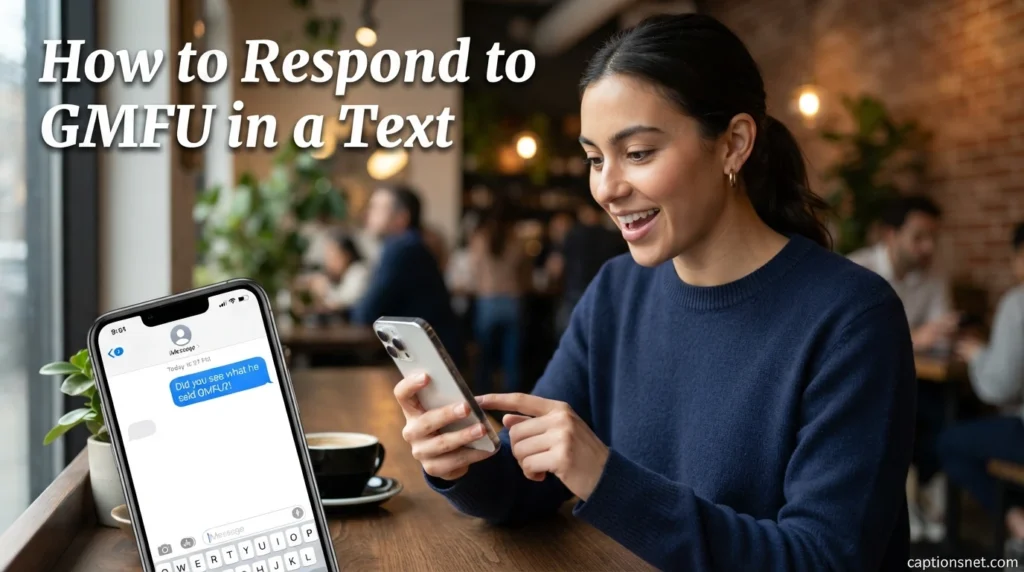
How to Respond to GMFU in a Text
- If the message seems playful, respond with light humor. 😄
- If the sender sounds upset, acknowledge their feelings. 🫂
- Ask what bothered them if the situation is unclear. ❓
- Avoid immediately responding with another aggressive phrase. 🧘
- A simple “What happened?” can open the conversation. 💬
- “Are you serious?” can mirror disbelief when joking. 😂
- “My bad” may work when you clearly made a mistake. 🙏
- “I did not mean it that way” can clarify your intention. 🌷
- “I understand” can help during a serious exchange. 🤝
- “Let’s talk about it” can create space for resolution. 🕊️
- A playful emoji can maintain a friendly mood. 😭
- A sincere apology can help after genuine disrespect. 💛
- Avoid mocking someone who is clearly upset. 🚫
- Do not assume every use is hostile. 🌈
- Do not assume every use is a joke either. ⚖️
- Read the surrounding conversation before replying. 🔍
- Consider the relationship between you and the sender. 👫
- Match the seriousness of the situation rather than the slang alone. 🎯
- Choose clarity when emotions are high. 🗣️
- A thoughtful response can prevent a small misunderstanding from growing. 🌱
There is no single universal reply to GMFU because the abbreviation can express anything from playful disbelief to serious frustration. The best response depends on the context.
GMFU Acronym Meaning in Social Media Culture
- Internet culture encourages short and memorable expressions. 🌐
- Acronyms allow people to communicate quickly. ⚡
- Comment sections reward concise reactions. 💬
- Memes frequently rely on exaggerated emotional language. 😂
- Social platforms help slang travel between communities. 🌍
- Short-form videos create countless opportunities for reactions. 🎥
- Users often adapt spoken expressions into text abbreviations. 🗣️
- GMFU fits the fast rhythm of digital conversations. 📱
- Lowercase versions may appear especially casual. ✨
- Capital letters can visually emphasize intensity. 📢
- Emojis often accompany emotional slang. 😭
- Memes can give expressions playful meanings. 🖼️
- A phrase can become recognizable without becoming formally standardized. 📖
- Different online communities may interpret slang differently. 🧩
- Language evolves as users create new shortcuts. 🌱
- Slang can move from speech into texting. 🔄
- Digital communication removes many traditional tone signals. 📲
- Emojis therefore become useful emotional clues. 😊
- Context remains essential for understanding abbreviated language. 🔎
- Online language continues to change over time. 🌟
The expression’s popularity reflects a broader pattern in internet communication: people shorten familiar phrases while preserving their emotional impact. Sources discussing GMFU describe it as an informal reaction abbreviation used in texts, comments, captions, and chats.
GMFU Text Abbreviation and Common Misunderstandings
- Some readers assume every GMFU message is angry. 😠
- In reality, friends can use it playfully. 😂
- Others may think it has a romantic meaning. 💕
- Its usual slang use is not inherently romantic. 💬
- Some people interpret it as an insult automatically. 🫤
- Context can reveal a much lighter intention. 🌈
- A crying-laughing emoji can soften the message. 😭
- A serious argument can make the same phrase harsher. 🔥
- Capitalization does not determine the complete meaning. 🔠
- The surrounding words usually provide better clues. 🔍
- A standalone GMFU can be especially ambiguous. 🧩
- Relationship history can provide additional context. 👫
- The sender’s normal slang habits can help. 🧠
- A public comment may sound different from a private message. 🌐
- A joke may contain deliberately exaggerated frustration. 🎭
- Profanity does not always indicate genuine hostility. 🗣️
- Genuine hostility can nevertheless use the same abbreviation. ⚠️
- Asking a gentle question can resolve uncertainty. ❓
- Avoiding assumptions helps protect relationships. 🫶
- Understanding context is the key to accurate interpretation. 🗝️
One of the biggest mistakes is treating an abbreviation as if it has exactly one emotional setting. GMFU has a core meaning, but its conversational function can shift according to the circumstances.
GMFU Meaning in Text for Parents, Teachers, and Beginners
- Digital slang can look confusing to people unfamiliar with it. 📱
- Learning common abbreviations can make online communication easier. 🌟
- Parents may encounter GMFU in messages or social posts. 👪
- Teachers may see similar slang in informal student communication. 🧑🏫
- Beginners should focus on context rather than memorizing letters alone. 🧠
- The original phrase contains profanity. ⚠️
- Understanding a slang term does not require using it. 🌷
- Knowing its meaning can prevent accidental misunderstandings. 🛡️
- A neutral explanation is often better than an emotional reaction. 🕊️
- Asking the sender what they mean is perfectly reasonable. 💬
- Slang changes quickly across online communities. 🔄
- One abbreviation can have different meanings in different fields. 🧩
- Everyday texting usually provides the strongest clues. 🔎
- Professional environments generally require more formal language. 💼
- Children and younger users may encounter slang through social media. 🌐
- Adults can learn internet vocabulary without adopting every term. 🌱
- Language awareness can improve digital communication. ✨
- Respectful conversation remains important regardless of slang. 🤝
- Understanding profanity helps readers recognize tone. 📚
- Curiosity is a healthy way to approach unfamiliar language. ❤️
For beginners, the simplest takeaway is that GMFU usually expresses a strong reaction, often involving disbelief, frustration, annoyance, shock, or feeling disrespected. It is not normally a neutral abbreviation.
GMFU Slang Alternatives for Polite Conversations

- Try “Are you serious?” for gentle disbelief. 🤨
- Use “I cannot believe this” for clear surprise. 😮
- Say “That is unbelievable” when you want emphasis. 🤯
- Use “That really surprised me” for a neutral tone. 🌼
- Say “I am frustrated” when expressing your emotion directly. 😮💨
- Use “That bothered me” during a serious discussion. 💭
- Say “I did not appreciate that” when addressing disrespect. 🤝
- Use “That was unexpected” for a calm reaction. 🌤️
- Say “Wow, I was not expecting that” when surprised. 😯
- Use “That is really frustrating” for everyday annoyance. 😤
- Say “I need a moment” when emotions are running high. 🌙
- Use “Can we talk about what happened?” to encourage discussion. 🗣️
- Say “I am confused” when you need clarification. ❓
- Use “That does not seem fair” for an objection. ⚖️
- Say “Please explain what happened” when details are missing. 🔎
- Use “I understand why you are upset” to show empathy. 🫂
- Say “Let’s clear this up” when misunderstanding is possible. 🧹
- Use “I did not intend to upset you” when appropriate. 💛
- Say “Can we start over?” when tension has increased. 🌱
- Choose respectful wording whenever the conversation matters. ❤️
Polite alternatives are particularly useful when you want your message to be understood without the extra intensity of profanity. The best replacement depends on whether your goal is to communicate surprise, frustration, disappointment, or a boundary.
GMFU Meaning in Text: FAQs and Final Takeaways
- GMFU most commonly means Got Me F***ed Up. 🔤
- It is informal internet and texting slang. 📱
- The expression usually communicates a strong reaction. 💥
- Disbelief is one common emotional meaning. 😮
- Frustration is another common interpretation. 😤
- Shock can also motivate its use. 😲
- Feeling disrespected can make the phrase more serious. 🫤
- Close friends may use it playfully. 😂
- Arguments can make it sound confrontational. ⚡
- Emojis can help reveal the intended tone. 😊
- Lowercase and uppercase versions generally share the same basic meaning. 🔠
- The expression is usually unsuitable for professional communication. 💼
- Context is essential when interpreting a standalone abbreviation. 🔍
- Similar phrases can communicate the same idea more politely. 🌷
- A gentle question can clarify an ambiguous message. ❓
- The slang is not normally a secret romantic code. 💕
- Social media has helped expressions like this circulate widely. 🌐
- The phrase is generally emotional shorthand rather than literal language. 🧠
- Understanding the meaning does not mean you need to use it. 🌱
- The safest interpretation comes from considering the entire conversation. ❤️
FAQs
What does GMFU mean in text?
GMFU most commonly stands for Got Me F*ed Up**. It is informal slang used to express strong disbelief, frustration, shock, annoyance, or a feeling of being disrespected.
Is GMFU a bad word?
The abbreviation represents a phrase containing profanity, so it has a strong and informal tone. It is generally better suited to casual conversations than professional or formal communication.
Can GMFU be used as a joke?
Yes. Close friends sometimes use it playfully or dramatically, especially when reacting to something funny or mildly irritating. Emojis and the surrounding conversation can make the humorous intention clearer.
Does GMFU always mean someone is angry?
No. The expression can communicate frustration or anger, but it can also express shock, disbelief, amusement, or exaggerated annoyance. Context determines the emotional strength.
What does GMFU mean from a friend?
From a friend, it may be either playful or serious. If the message contains laughing emojis or follows an obviously funny situation, it may be teasing. If it follows an argument or personal disagreement, it may indicate genuine frustration.
Is GMFU appropriate at work?
Generally, it is better avoided in professional communication because the underlying phrase contains profanity and can sound confrontational. A clearer expression such as “I am frustrated” or “I do not understand what happened” is safer.
How should I reply when someone says GMFU?
Consider the context first. If they are joking, you can respond playfully. If they seem genuinely upset, acknowledge the concern, ask what happened, and avoid escalating the conversation.
Conclusion
The core slang meaning is generally the same across texting and social platforms. What changes is the context. A TikTok comment may be humorous, while a private message during an argument may carry considerably more emotional weight.
Understanding gmfu meaning in text ultimately comes down to more than decoding four letters. The abbreviation is a compact way of expressing a powerful reaction, and that reaction can range from playful disbelief to genuine frustration. Its meaning becomes much clearer when you consider the sender, the situation, the relationship, punctuation, and accompanying emojis.
If you encounter GMFU in a casual conversation, think of it as an emotionally charged reaction rather than a neutral statement. And if you decide to use it yourself, remember that its underlying profanity makes it considerably stronger than alternatives such as “Are you serious?” or “I cannot believe this.”
The most important lesson is simple: understand the emotion behind the abbreviation before responding to the letters themselves. That small pause can help you recognize whether the sender is joking, venting, expressing disbelief, or genuinely asking to be heard.