
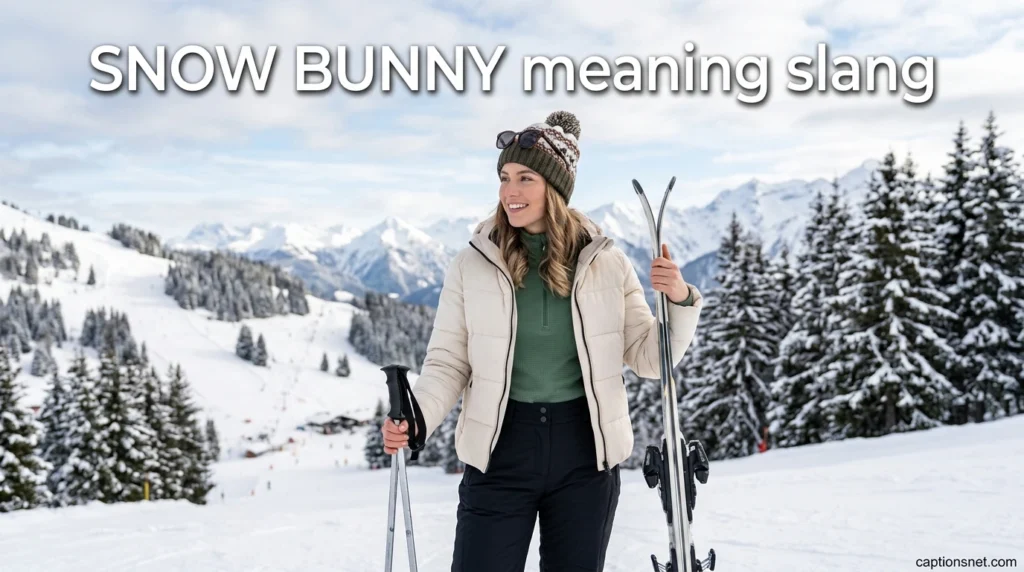
If you’ve ever come across the term in a TikTok comment, Snapchat chat, or Instagram caption and paused for a second thinking “wait… what does that even mean?”, you’re not alone. Internet slang evolves fast, and words that sound innocent on the surface often carry completely different meanings depending on context. That confusion is exactly why so many people search for quick, clear explanations of trending phrases.
One of those confusing terms is “snow bunny”—a slang expression that can feel harmless, funny, or even puzzling until you understand the context behind it. Like many pieces of Gen Z slang and social media vocabulary, its meaning shifts depending on who is using it, where it appears, and what tone the conversation has.
In this article, we’ll break down everything you need to know in a simple, beginner-friendly way. We’ll cover texting slang, internet abbreviation culture, Snapchat slang usage, TikTok meaning trends, WhatsApp chat interpretation, Instagram chat terms, and real online messaging examples so you can fully understand how the term is used in modern communication.
What Does “Snow Bunny” Mean in Slang?
In modern internet slang, a “snow bunny” most commonly refers to a white woman who is romantically interested in or dating Black men, especially within hip-hop and urban cultural contexts. The term is often used in casual conversation, social media comments, and online discussions where people talk about dating preferences or relationships.
However, the meaning isn’t always that strict. In some contexts, especially outside cultural slang circles, “snow bunny” can also refer to someone who enjoys winter sports like skiing or snowboarding, usually in a playful or aesthetic sense.
The phrase can therefore carry two major interpretations:
- A relationship/dating slang term used in urban and Gen Z internet culture
- A literal winter sports enthusiast term used in lifestyle or travel contexts
Because of this dual meaning, confusion is very common—especially when people encounter it in TikTok captions or comment sections without context.
In texting slang and online messaging, tone matters a lot. A single phrase can shift meaning depending on emojis, surrounding words, or platform culture.
Origin and Evolution of the Term
The term “snow bunny” has been around for decades, but its usage has evolved significantly with social media and internet culture.
Originally, it was used in a lighthearted way to describe someone who enjoyed snow-related activities, especially skiing or spending time in winter resorts. This meaning was common in travel and lifestyle conversations.
Later, within hip-hop and urban communities, the term took on a different cultural meaning. It began to be used in dating contexts, often referring to interracial attraction, particularly white women dating Black men. This shift happened gradually through music, pop culture, and street slang.
As internet culture grew, especially with platforms like Twitter, TikTok, and Instagram, the term became more widely circulated. Gen Z users adopted it into memes, captions, and comment threads, often without fully understanding its deeper cultural background.
Today, it exists as a layered slang term—part playful, part cultural, and sometimes controversial depending on usage.
Like many social media acronyms and slang phrases, its meaning depends heavily on tone, audience, and intent.
Snow Bunny Meaning Across TikTok, Snapchat, Instagram & WhatsApp
On different platforms, slang often shifts slightly in tone and interpretation. The same applies here.
On TikTok, the term is frequently used in comment sections under relationship videos, dating trends, or lifestyle content. It may appear in a humorous or meme-based way, often without deep explanation.
On Snapchat, it can appear in private chats or story replies, usually as casual slang between friends discussing dating or attraction. The meaning is often inferred rather than explicitly defined.
On Instagram, especially in captions or reels, the term is more likely to be used for aesthetic or lifestyle references, sometimes leaning toward winter vacation imagery or relationship jokes.
On WhatsApp, usage is less public and more conversational. Here, it depends entirely on the group chat culture—friends may use it jokingly or as part of informal texting slang.
Across all platforms, the meaning is shaped by:
- Emojis used in the message
- Cultural background of the users
- Conversation topic (dating vs. travel vs. memes)
This is a common pattern in internet slang, where context matters more than dictionary definitions.
Snow Bunny in Gen Z Slang and Internet Culture
Gen Z slang thrives on remixing old phrases and giving them new meanings. “Snow bunny” is a good example of this evolution.
In Gen Z internet culture, the phrase is often used in:
- Meme captions about dating preferences
- Funny commentary on interracial relationships
- Aesthetic winter-themed posts
- Light sarcasm in comment threads
What makes Gen Z slang unique is its flexibility. A term can be serious in one context and ironic in another. “Snow bunny” is often used ironically on TikTok, where users exaggerate or joke about stereotypes for humor.
At the same time, Gen Z users are also more aware of cultural sensitivity. This means the term is sometimes used carefully or avoided altogether depending on the audience.
In texting slang, the phrase may appear shortened or implied rather than fully written, especially in fast-paced online conversations where abbreviations and casual phrasing dominate.
This blending of humor, identity, and internet culture is what keeps slang terms like this constantly evolving.
Examples of “Snow Bunny” in Texts and Online Chats
Understanding slang becomes much easier when you see it in real conversation. Here are some examples of how it might appear in online messaging:
- “He’s definitely into snow bunnies 😂”
- “She’s giving full snow bunny vibes on that ski trip pic”
- “I thought you were talking about skiing, not dating lol”
- “Bro only dates snow bunnies, that’s his type”
- “This winter aesthetic is very snow bunny coded ❄️”
These examples show how tone can change everything. Some are playful, some are observational, and others are meme-based.
In Snapchat slang or Instagram DMs, you might also see emojis like ❄️🐰 used alongside the phrase to emphasize the meaning visually.
As with many internet abbreviations and casual texting phrases, the meaning is often understood instantly by those familiar with the culture—but confusing for newcomers.
When People Use the Term “Snow Bunny”
The term typically appears in informal and social contexts rather than professional or formal communication.
People use it when:
- Talking about dating preferences
- Commenting on social media posts
- Making jokes or memes
- Describing winter lifestyle aesthetics
- Engaging in casual group chat conversations
In TikTok and Instagram culture, it is often used for humor or commentary rather than serious discussion. It can also appear in music-related conversations, especially in genres where slang is common.
The tone is usually informal, and the phrase is rarely used in serious or academic settings. Like most Gen Z slang, it thrives in relaxed, digital environments where creativity and humor dominate communication.
When NOT to Use “Snow Bunny”
Even though the term is widely used online, it’s not always appropriate.
You should avoid using it when:
- You don’t understand the cultural context
- You are in formal or professional communication
- The conversation involves sensitive topics like race or relationships
- You are unsure how the other person interprets slang
Because the term has cultural and sometimes controversial undertones, using it incorrectly can lead to misunderstandings or offense.
In WhatsApp group chats or Instagram DMs, context is everything. What feels like a joke to one person might feel disrespectful to another.
A good rule in internet slang communication is simple: if you’re unsure, don’t use it casually.
Common Misunderstandings About the Term
One of the biggest misunderstandings is assuming the phrase only refers to winter sports. While that is one valid meaning, it is not the only one—and often not the one used in social media conversations.
Another misunderstanding is thinking the term is purely positive or purely negative. In reality, it sits somewhere in between depending on tone and context.
Some users also confuse it with similar slang expressions used in dating culture, which can lead to incorrect interpretations in chats or comments.
Because internet slang evolves quickly, people often rely on assumptions rather than actual meaning. This is why searching for explanations has become so common in Gen Z and social media audiences.
Understanding the context is key—especially in platforms like TikTok where trends spread fast but explanations do not.
Alternatives and Related Slang Terms
If you’re trying to understand or replace this phrase in conversation, there are several related slang expressions depending on context:
For dating-related meaning:
- “Type” (as in someone’s preferred partner type)
- “Preference”
- “Interracial dating slang terms” (general category discussions)
For winter-related meaning:
- “Ski girl”
- “Snowboarder vibe”
- “Winter aesthetic”
Other related internet slang and Gen Z terms include:
- “Vibes”
- “Coded” (e.g., “winter coded”)
- “Aesthetic”
- “Glow up”
- “Main character energy”
These alternatives are often safer and clearer when communicating with broader audiences.
FAQs
Is “snow bunny” offensive?
It depends on context. In some situations it’s harmless, but in others it can be culturally sensitive.
What does it mean on TikTok?
On TikTok, it usually refers to dating culture or is used in memes and jokes.
Does it always mean dating-related slang?
No, it can also refer to winter sports enthusiasts or aesthetic winter vibes.
Is it common in Gen Z slang?
Yes, but its usage varies and is not as universal as other slang terms.
Can I use it in chats?
Only if you fully understand the context and your audience is familiar with the term.
Conclusion
Internet slang is constantly evolving, and “snow bunny” is a perfect example of how a simple phrase can carry multiple meanings depending on culture, platform, and context. Whether used in TikTok comments, Snapchat chats, Instagram captions, or WhatsApp conversations, its interpretation changes based on tone and intent.
Understanding slang like this helps you navigate online messaging more confidently, especially in Gen Z digital spaces where meanings shift quickly. While it may seem confusing at first, breaking it down through examples, context, and platform usage makes it much easier to understand.
As with most slang in texting culture, the safest approach is always to read the context carefully before using it yourself.