
Here Are the Best Ways to Find Cheap Ammunition Without Sacrificing Quality
Shooting often feels like a luxury when every box of cartridges drains your wallet, but cheap ammunition changes that by delivering reliable, range-ready rounds at a fraction of the cost. These budget-friendly loads use simpler casings, lighter projectiles, or bulk-packed components to keep performance consistent for practice without sacrificing function. You can run more drills, zero your sights, and build muscle memory without guilt, since the lower price per round lets you train longer for the same money. Just verify your firearm cycles the specific brand reliably before buying in bulk, and you’ll get dependable plinking or target work with every trigger pull.
What Actually Counts as Budget-Friendly Ammo Without Sacrificing Performance?

Budget-friendly ammo without sacrificing performance means prioritizing reloadable brass cases, proven bullet weights, and consistent powder charges over premium branding or specialty hunting loads. For practice, full metal jacket (FMJ) rounds in standard calibers like 9mm, .223 Remington, or .308 Winchester from reputable manufacturers—such as Winchester, Federal, or Sellier & Bellot—deliver reliable cycling and acceptable accuracy at 20–40% less cost than defensive or match ammunition. The real test is shot-to-shot velocity consistency: if your group sizes stay within 2–3 inches at 25 yards, the cheap option performed.
Steer clear of steel-cased or remanufactured ammo if your firearm is sensitive to extraction, as malfunctions cost more time than money saved.
Also, buying in bulk (500–1000 rounds) of a single lot ensures identical ballistic behavior, letting you train with the same point of impact as your carry ammo without paying defensive prices.
Understanding Price Per Round vs. Overall Value Metrics
When evaluating cheap ammunition, a low price per round often masks inferior performance. Overall value metrics require calculating cost against consistent accuracy, reliable ignition, and minimal fouling—factors that affect your shooting session’s total expense. A box at $0.60 per round that causes two malfunctions or keyholing costs you more in range time and target replacement than a $0.70 round that groups tightly. Also, factor in shipping, bulk discounts, and whether the round’s velocity matches your zeroing data; a cheaper load that shifts your point of impact by two inches forces additional sighting-in ammo. Prioritize per-round cost only after confirming the load’s repeatability in your firearm, not just on paper specs.
Price per round is an entry filter; overall value metrics—accuracy, reliability, and real-world cost per usable shot—determine true budget-friendliness.
Why Remanufactured and New Production Budget Rounds Differ
Remanufactured budget rounds start life as once-fired military or commercial brass, which is inspected, deprimed, and reloaded with fresh primers and projectiles. This process cuts material costs dramatically, but it introduces variability: each batch of once-fired brass may have been stretched, annealed, or damaged differently, so case wall thickness and internal volume can vary slightly. New production budget rounds, by contrast, use virgin brass formed to tight tolerances, ensuring consistent chamber pressure and neck tension every time. That consistency translates into more predictable velocity and point-of-impact, which matters for zeroing or competition. Remanufactured rounds are cheaper per box, but you may see wider shot groups or occasional failures to extract if the brass was weak. New budget loads cost a bit more but deliver reliable ignition and uniform ballistics across the full box. For defensive use or precision work, new production wins; for plinking and paper, remanufactured is acceptable—if you inspect each round’s headstamp and case .17 HMR Ammo for Sale condition first.
Remanufactured rounds trade case consistency for lower price, while new budget rounds sacrifice little performance for more uniform ignition—so choose remanufactured only for casual shooting, and new production when accuracy or reliability 7.62x54R Ammo for Sale is non-negotiable.
How to Spot the Sweet Spot Between Low Cost and Reliable Ignition
To spot the sweet spot between low cost and reliable ignition, prioritize rounds with sealed primers and crimped cases, as these resist moisture and setback during feeding. Test a single box across multiple firearm platforms, tracking misfires per 100 rounds; a rate above 1% disqualifies the savings. Compare lot numbers—budget 5.56 Ammo for Sale brands often vary batch-to-batch, so verify consistency in primer strike indent depth. Reliable ignition hinges on primer hardness matching your firing pin spring weight; softer primers in cheap ammo can cause pierced strikes in light trigger setups, while harder ones fail in worn guns. Settle on the cheapest load that cycles 200 rounds without a single failure.

- Chronograph velocity consistency across 10 rounds to spot weak primer charges.
- Inspect spent casings for light primer strikes or incomplete burns.
- Rotate between two budget brands and log failure rates before bulk-buying.
Cartridge Types Where Saving Money Matters Most
For shooters prioritizing volume over precision, cheap ammunition shines .17 WSM Ammo for Sale in specific cartridge types where cost-per-round dominates. The 9mm Luger is the prime example—practice-grade loads are abundant, and because defensive ammo is where you should invest, saving on range fodder matters most. Similarly, .223 Remington/5.56 NATO allows inexpensive AR-15 training, but only for plinking and drills; your cartridge types where saving money matters most are those with high consumption, like .22 LR for marksmanship fundamentals. Avoid skimping on hunting rounds like .308 or .30-06—terminal performance relies on quality bullets. Stick to budget-friendly 9mm and .22 LR for volume fire, and reserve your savings there, not on potent loads where reliability is non-negotiable.
9mm, .223, and .308: Where Volume Discounts Shine
For shooters of 9mm, .223, and .308, case quantities unlock the deepest price cuts. A 1,000-round case of 9mm typically drops per-round cost by 15–25% compared to 50-round boxes, making it the ideal entry point for bulk buying. Similarly, .223 in 500- or 1,000-round lots reduces cost significantly, especially when training with an AR-15. The .308 benefits most from 200- or 500-round bulk packs, where savings offset its higher baseline price. These three calibers dominate volume pricing because demand is steady and production runs are massive. Prioritize cases over individual boxes to maximize every dollar spent.
9mm, .223, and .308 deliver the largest per-round savings when purchased in bulk cases, cutting costs by up to 25% versus boxed retail.
Steel-Cased vs. Brass-Cased: Real-World Tradeoffs for Your Gun

Steel-case is where you save real cash per round, but that savings comes with tradeoffs your gun will notice. Steel doesn’t expand and seal like brass, so you get more carbon fouling in your chamber and a dirtier bolt carrier group. It also has a polymer coating that can stick in tight chambers when things heat up, especially in AR-15s. Brass, on the other hand, costs more but reloads cleanly, extracts reliably, and is easier on your extractor over thousands of rounds. Steel-cased ammo’s real-world tradeoff is more cleaning for less money—perfect for range blasting, but not for defensive use or high-round-count classes where a stuck case ruins your session.
- Steel cases often need a firmer extractor spring to avoid failures.
- Brass cases are reusable if you reload, offsetting their higher upfront cost.
- Steel’s lacquer or polymer can build up in the chamber after rapid fire.
- Brass runs smoother in finicky guns like pistols with tight tolerances.
Subsonic and Plinking Loads That Keep Range Days Affordable
Subsonic and plinking loads stretch range budgets by pairing lighter projectiles with minimal powder charges, often costing less per round than standard defensive ammunition. For plinking, bulk-packed 9mm or .22 LR loads prioritize function over precision, letting shooters burn through hundreds of rounds without guilt. Subsonic loads in pistol calibers reduce noise and recoil, which extends shooting sessions by lowering fatigue while still cycling reliably in suppressed or standard firearms. The trade-off is a flatter trajectory at longer distances, but that rarely matters on a 25-yard plinking setup. These rounds also trim barrel wear and cleaning frequency, adding hidden savings.
- Choose 147-grain 9mm subsonic for quiet, low-recoil practice
- Stock up on bulk .22 LR high-velocity plinking rounds for cost-per-round lows
- Use 45 ACP hardball loads for outdoor plinking where subsonic speed is inherent
- Test a small box first to confirm reliable cycling in your specific firearm
Why Bulk Buying Cheap Rounds Lowers Your Cost Per Trigger Pull
When you’re burning through a hundred rounds every range trip, the per-box price stops being a number and becomes a habit—a painful one. Buying cheap ammunition in bulk flips that equation because the fixed costs of shipping and handling get spread across thousands of rounds, not a single fifty-count box. That dusty pallet of bargain 9mm or .223, bought in one go, slashes the price per trigger pull so low that you stop flinching at the register and start flinching at the actual recoil. The 7.62×39 Ammo for Sale math is brutal: a $14 box of fifty costs 28 cents a round, but a case of a thousand at $240 drops you to 24 cents—and that four-cent difference compounds with every mag you dump. You don’t feel the savings on the first mag, only on the tenth. Suddenly, cheap ammunition becomes the tool that lets you train through a brick of rounds without budgeting a second thought, turning every squeeze into a repetition that costs less than a gumball. That’s the real win: bulk buys turn trigger time from a splurge into a daily drill, and cheap rounds become the repetition engine you actually afford to feed.
Calculating Storage Needs and Shelf Life for Large Purchases
To truly realize the savings of bulk buying, you must calculate storage needs before checkout. A basic rule is that 1,000 rounds of 9mm occupies roughly one cubic foot, so map your available safe or closet space against that volume. More critical than physical space is shelf life; properly sealed factory ammunition, stored in a cool, dry environment, remains reliable for decades, making it a stable investment. Your real enemy is humidity, so invest in airtight containers with desiccant packs and avoid attic or basement extremes. By pairing precise volume calculations with disciplined environmental control, you ensure your bulk purchase cost efficiency isn’t wasted on corroded or misfired rounds later. This foresight secures your financial advantage.
Using Flat-Rate Shipping and Membership Deals to Slash Final Price
Flat-rate shipping transforms bulk ammo economics because the per-box delivery cost collapses as your order grows. A $15 flat fee on five boxes adds $3 per box, but on twenty boxes it drops to $0.75, making membership deals on bulk ammunition even more decisive. Joining a retailer’s paid or free loyalty tier often unlocks free ship thresholds, exclusive coupon codes, or a straight percentage off case orders—stacking directly onto that flat-rate base. Before specialty sports & supply checkout, compare the membership fee against your projected annual savings; a $99 annual membership pays for itself if it shaves 5% off four or more bulk orders. Always apply the flat-rate option first, then add membership discounts—never accept a per-box shipping quote without asking if a flat-rate code exists.
Flat-rate shipping plus membership discounts cuts final cost per round by absorbing delivery overhead and applying tiered savings directly to bulk purchases.
How to Test a Budget Lot Quickly Without Wasting Time or Money
Grabbing a brick of bargain 9mm, I don’t run a full chronograph session—I load three magazines with ten rounds each. First, I check seating depth and rim thickness on five random cases, since cheap brass is often inconsistent; any round that fails the plunk test gets tossed immediately. Then I fire one mag at a 7-yard target, watching for keyholing or erratic point-of-impact shifts, which scream undersized bullets or weak charges. If the first ten cycle without a stovepipe, I shoot the second mag fast to provoke a jam under stress. The third mag goes into a sandbag for a five-shot group. *“How do I know if a budget lot is worth buying without firing 200 5.7x28mm Ammo for Sale rounds?”* — shoot only twenty-five, but mix in one +P defensive round at the end to see if the cheap primers handle pressure spikes without piercing. That’s it—under fifteen minutes, you’ve got enough data to trust or trash the lot.
Function Checks: Feeding, Extracting, and Ejecting Under Stress
Run a stress-driven function check with cheap ammo by loading full mags and firing rapid strings, forcing the bolt to strip rounds under recoil. Watch for stovepipes on weak ejection, then switch to a limp-wrist grip to expose feeding failures that only surface when the frame flexes. With budget rounds, extractor tension is everything—fire one round, pause, and inspect the spent case for rim tears or stripped rims. If the slide locks back early or fails to pick up the next round, that’s a magazine spring issue amplified by underpowered loads. Cycle through all mags, mix in dirty or lightly oiled conditions, and note any double-feeds.
| Check | Cheap Ammo Failure Symptom | Quick Fix |
|---|---|---|
| Feeding | Nose-dive into ramp | Swap to a hotter load |
| Extracting | Case stuck mid-eject | Clean chamber and extractor |
| Ejecting | Weak toss, brass hits your head | Inspect ejector spring |
Chronograph Testing Cheap Loads for Velocity Consistency
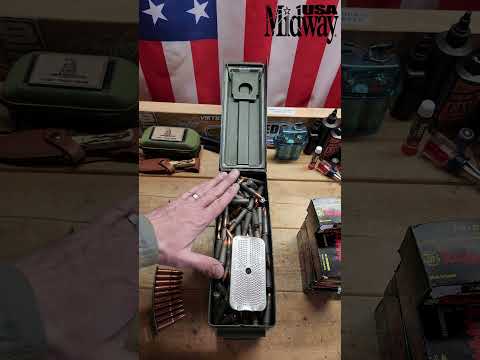
When testing budget ammunition, a chronograph transforms vague suspicion into hard data on velocity consistency. Shoot ten rounds over the unit, recording each reading, then calculate the standard deviation—anything under 20 fps is acceptable for cheap loads, while 30+ fps signals poor powder charging. Don’t waste time on five-shot samples; ten gives a statistically honest picture for roughly the cost of one box. Extreme spread matters more than average speed for practical accuracy, so note the gap between your slowest and fastest rounds. For a quick pass: set the chronograph three to five feet from the muzzle, shoot from a rested position, and discard any obvious fliers caused by shooter error. Finally, compare results across two lots if possible, since budget ammo often varies batch-to-batch, Ammo Cans & Storage for Sale revealing whether your savings price tag is worth the performance gamble.
Accuracy Benchmarks That Matter for Pistols, Rifles, and Pest Control
For accuracy benchmarks that matter with cheap ammunition, a pistol should hold a fist-sized group at 25 yards from a sandbag rest—if it opens past four inches, the lot is unreliable for defensive work. Rifles demand a tighter standard: a sub-2-inch five-shot group at 100 yards validates budget rounds for hunting or steel; anything beyond 3 inches is plinking fodder. Pest control sits between them, needing a one-inch group at 25 yards from a .22 or .17 HMR to ensure ethical headshots on rodents. The benchmark is always the shot placement your target requires, not the tightest possible group. Test three five-shot strings per lot, cold barrel, and average them—before you buy a case.
Cleaning and Gun Maintenance Tips When Using Low-Cost Rounds
When running cheap ammunition, expect heavier fouling from inconsistent powder burn rates and softer primers. After each session, field-strip and scrub the bolt face and firing pin channel with a carbon solvent—low-cost rounds often leave sticky residue that causes light strikes. Pay special attention to the chamber and feed ramp; abrasive lacquer or residue from budget brass can cause stuck cases, so use a bronze brush and bore cleaner weekly. For cleaning and gun maintenance tips when using low-cost rounds, check gas ports or revolver cylinders for lead shaving buildup, then wipe rails with a dry lube. Finally, run a bore snake soaked in copper remover to prevent jacket fouling from bimetal-jacketed bullets, and lightly oil the extractor to ensure reliable ejection.
Dealing With Faster Fouling From Copper-Washed or Lacquered Cases
When shooting low-cost rounds, copper-washed or lacquered 7mm PRC Ammo for Sale cases accelerate fouling by depositing polymer or metal residues directly into the chamber and bore. This buildup is stickier than standard powder residue, so clean within 24 hours to prevent it from baking into a hard glaze. Use a solvent specifically formulated for copper removal, and scrub with a bronze brush, not a stainless one, to avoid polishing the steel. For lacquer fouling, apply a penetrating oil and let it dwell for ten minutes before wiping. Faster fouling from copper-washed cases also demands aggressive bore-snake passes between range sessions.
- Reduce round count per session to 50, then field-strip for a bore wipe.
- Run a wet patch soaked in copper solvent, followed by a dry patch, after every 100 rounds.
- Lubricate the chamber mouth lightly to discourage lacquer adhesion.
Extending Barrel Life While Shooting High-Round-Count Budget Ammo
Cheap ammo often runs dirtier and hotter, so your barrel’s throat erodes faster under high round counts. To extend barrel life while shooting high-round-count budget ammo, prioritize a wet bore before each session—a light oil 7.62×51 Ammo for Sale film cushions the initial fouling surge. Aggressive carbon and copper removal every 200–300 rounds prevents heat-trapping deposits that accelerate wear. Use a bore guide and a coated rod, scrubbing from the chamber end only; this avoids unnecessary muzzle wear that accuracy demands. Let the barrel cool completely between magazines—a hot tube burns off protective oils and softens steel. Ironically, the cheapest way to save a barrel is to shoot slower, not less. Finish by patching out solvent residues, then leaving a thin preservative coat until your next cheap-ammo run.
Lubrication and Solvent Choices That Counteract Dirtier Burn Rates
When using low-cost rounds, their erratic powder often leaves stubborn carbon and fouling that standard oils fail to break down. To counteract dirtier burn rates, select solvent-resistant, high-viscosity lubricants that stay put during firing rather than burning off or attracting grit. Apply a wet-film CLP only to friction points—rails, lugs, and barrel exterior—while using a dedicated carbon-removing solvent (e.g., breakthrough-type formulas) on the bolt face and chamber, letting it dwell for five minutes before scrubbing. Avoid dry-film lubricants; they lack the cling needed for dirty combustion. Finally, run a lightly oiled patch through the bore post-cleaning to neutralize corrosive residue without leaving excess that traps future carbon.
- Use a copper-removing solvent for baked-on carbon rings in the chamber.
- Choose a low-flash-point oil for slide rails to prevent gumming from burnt powder.
- Alternate between a degreaser and a lithium-based grease on locking surfaces to disrupt carbon bonding.