
Have you ever seen someone mention the evil eye online and wondered what it means? Many people come across the term on social media, in conversations, or even in comments and captions without fully understanding it. The confusion grows because the phrase can refer to a cultural belief, a symbol of protection, or simply an expression used online. Whether you spotted it on TikTok, Instagram, Snapchat, or WhatsApp, understanding the meaning behind it can help you better interpret conversations and trends.
Today, internet culture spreads words, symbols, and expressions faster than ever. While some terms are modern texting slang or internet abbreviations, others come from ancient traditions and have found new life on social media platforms. The evil eye is one such example. People use the symbol in posts, emojis, jewelry, and captions, often without explaining its significance.
This guide explains the exact meaning, how it is used across different platforms, examples in chats, when to use it, when not to use it, common misunderstandings, alternatives, and frequently asked questions.
What Is the Evil Eye Meaning?
The evil eye meaning refers to a belief that a person can unintentionally or intentionally cause harm through jealousy, envy, or negative attention. Many cultures around the world believe that receiving excessive admiration or envy can attract bad luck, misfortune, or negative energy.
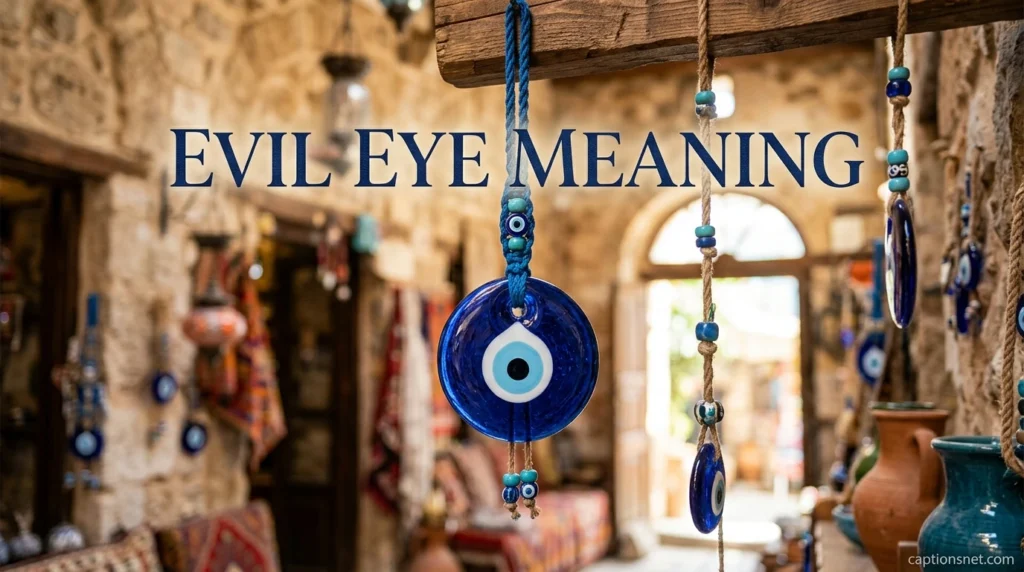
To protect against this perceived negativity, people often wear an evil eye symbol, usually represented by a blue eye-shaped charm. This symbol is believed to ward off harmful intentions and provide protection.
In modern online culture, the evil eye is often mentioned when discussing:
- Jealousy
- Envy
- Protection
- Good luck
- Spiritual beliefs
- Cultural traditions
- Social media attention
While some people take the belief seriously, others use the term casually or symbolically.
The History Behind the Evil Eye
The concept of the evil eye dates back thousands of years. It appears in various cultures across:
- The Middle East
- Greece
- Turkey
- South Asia
- North Africa
- Mediterranean regions
Historically, people believed that excessive praise or envy could bring negative consequences. To counter this effect, protective symbols, prayers, and rituals were developed.
One of the most recognized protective symbols is the blue eye amulet often seen in jewelry, keychains, decorations, and accessories. Over time, the symbol became widely recognized around the world and eventually became popular on social media.
Today, many people wear the symbol as a fashion accessory, while others view it as a meaningful cultural or spiritual object.
How the Evil Eye Is Used on Social Media
Social media has transformed traditional concepts into modern trends. The evil eye frequently appears on platforms such as:
- TikTok
- Snapchat
Users often post the symbol after sharing achievements, milestones, vacations, relationships, or personal successes.
Common reasons people use it online include:
- Seeking protection from jealousy
- Expressing spiritual beliefs
- Following aesthetic trends
- Referencing cultural traditions
- Using it as a fashionable symbol
For example:
“Finally bought my dream car 🧿”
“New apartment reveal 🧿”
“Everything is going great lately 🧿”
In these examples, the symbol is used to symbolize protection from negative energy or envy.
Different Meanings Across Platforms
The meaning can vary slightly depending on where you see it.
On Instagram, the evil eye symbol often accompanies:
- Travel photos
- Luxury purchases
- Relationship announcements
- Life updates
Users may add it to captions to suggest protection against envy.
Example:
“Feeling blessed lately 🧿”
TikTok
TikTok users frequently discuss:
- Spiritual practices
- Manifestation
- Energy protection
- Cultural traditions
Videos may explain how the symbol works or share personal experiences related to it.
Example:
“I never post big achievements without adding 🧿.”
Snapchat
On Snapchat, usage is generally casual and visual.
People might use the symbol when:
- Showing off accomplishments
- Posting selfies
- Sharing exciting news
In WhatsApp chats, the symbol often appears in:
- Family conversations
- Group chats
- Celebration messages
Example:
“Congratulations on your promotion! 🧿”
Online Communities
Forums and discussion groups may use the term in conversations about:
- Spirituality
- Cultural traditions
- Symbolism
- Personal beliefs
Examples in Chats and Messages
Understanding real-world examples can make the meaning easier to recognize.
Example 1
Friend A:
“I got accepted into my dream university!”
Friend B:
“That’s amazing! 🧿”
Meaning: Wishing protection and good fortune.
Example 2
Person A:
“My business has been growing so fast lately.”
Person B:
“Keep it up and stay protected 🧿”
Meaning: Acknowledging success while expressing protection from envy.
Example 3
Caption:
“Best year of my life so far 🧿”
Meaning: Celebrating success while symbolically guarding against negativity.
Example 4
Comment:
“You’re glowing lately 🧿”
Meaning: Complimenting someone while wishing positive energy.
Is the Evil Eye a Texting Slang Term?
Unlike texting slang, internet abbreviations, or social media acronyms, the evil eye is not technically a slang term.
Terms such as:
- LOL
- BRB
- IMO
- SMH
- TBH
are considered internet abbreviations because they shorten common phrases.
The evil eye is different because it represents a symbol and belief rather than a shortened phrase.
However, because it frequently appears in online messaging, many users encounter it alongside:
- Chat meaning discussions
- Snapchat slang
- TikTok meaning explanations
- WhatsApp meaning guides
- Instagram chat terms
- Casual texting phrases
- Gen Z slang trends
This overlap often leads people to search for its meaning online.
When Should You Use the Evil Eye Symbol?
There are many situations where using the symbol may feel appropriate.
Celebrating Success
People often use it after sharing:
- Promotions
- New jobs
- Academic achievements
- Business growth
Example:
“Just launched my new website 🧿”
Offering Protection
You can include it when congratulating friends or family.
Example:
“So proud of you 🧿”
Cultural Expression
Many people use it as part of their cultural identity and traditions.
Fashion and Aesthetic Content
The symbol is frequently included in:
- Jewelry posts
- Lifestyle content
- Travel photos
- Fashion photography
When You Should Avoid Using It
Although common online, there are situations where using the symbol may not be appropriate.
Professional Communication
Avoid using it in:
- Formal emails
- Business proposals
- Academic documents
Professional settings usually require clear and neutral communication.
Sensitive Discussions
Topics involving:
- Serious illness
- Loss
- Tragedy
may not be suitable places for symbolic expressions unless culturally relevant.
Without Understanding the Context
Since the symbol has cultural and spiritual significance for many people, it is helpful to understand its meaning before using it casually.
When Someone May Misinterpret It
Not everyone recognizes the symbol, and some may misunderstand its purpose.
Alternatives to the Evil Eye Symbol
If you want to express positivity or protection without using the evil eye, consider alternatives.
Positive Emojis
- ✨
- 🙏
- ❤️
- 🌟
- 🍀
Supportive Phrases
- Stay blessed
- Wishing you luck
- Sending positive vibes
- Best wishes
- Stay safe
Encouraging Comments
- Keep shining
- Proud of you
- Wishing you success
- You deserve it
These alternatives can communicate similar supportive intentions.
Common Misunderstandings About the Evil Eye
Many misconceptions exist because the symbol is widely shared online.
Misunderstanding 1: It Means Something Evil
The symbol is actually intended as protection against negativity rather than representing evil itself.
Misunderstanding 2: It Is Only Religious
While some religious communities recognize related beliefs, the concept is largely cultural and traditional rather than tied to a single religion.
Misunderstanding 3: It Is Just a Fashion Trend
Many people wear it as a fashion accessory, but for others it carries deep cultural meaning.
Misunderstanding 4: Everyone Believes It Works
People have different opinions. Some strongly believe in its protective qualities, while others view it as a symbolic tradition.
Misunderstanding 5: It Is a New Social Media Trend
The concept has existed for centuries and became popular online only recently.
FAQs
What does the evil eye symbol mean?
It is commonly believed to protect against jealousy, envy, negative energy, and bad luck.
Why is the symbol usually blue?
Blue has historically been associated with protection in many cultures that use the symbol.
Is the evil eye emoji the same as the traditional symbol?
Online representations often serve the same symbolic purpose, although designs can vary.
Can anyone use the evil eye symbol?
Many people use it regardless of cultural background, though understanding its history and significance is recommended.
Is it considered good luck?
Many people believe it helps attract protection and positive energy.
Why do influencers use it so often?
Influencers frequently share personal successes and achievements, so they may use the symbol to express protection from envy or negative attention.
Is it related to texting slang?
No. It is not an internet abbreviation or social media acronym. It is a symbolic expression that appears in online messaging.
Why do people put it in Instagram captions?
They often use it when sharing positive life events, achievements, or milestones.
Conclusion
The evil eye remains one of the world’s most recognizable symbols of protection and positivity. Although its roots stretch back thousands of years, social media has introduced it to a new generation of users. Today, it appears in Instagram captions, TikTok videos, Snapchat stories, WhatsApp chats, and countless online conversations.
Unlike traditional texting slang, internet abbreviations, or social media acronyms, the evil eye represents a cultural and symbolic concept rather than a shortened phrase. People use it to acknowledge success, seek protection from envy, celebrate achievements, and express positive intentions.
Whether you view it as a meaningful tradition, a spiritual symbol, or simply a popular online trend, understanding its context helps you interpret conversations more accurately and engage confidently across modern digital platforms.