
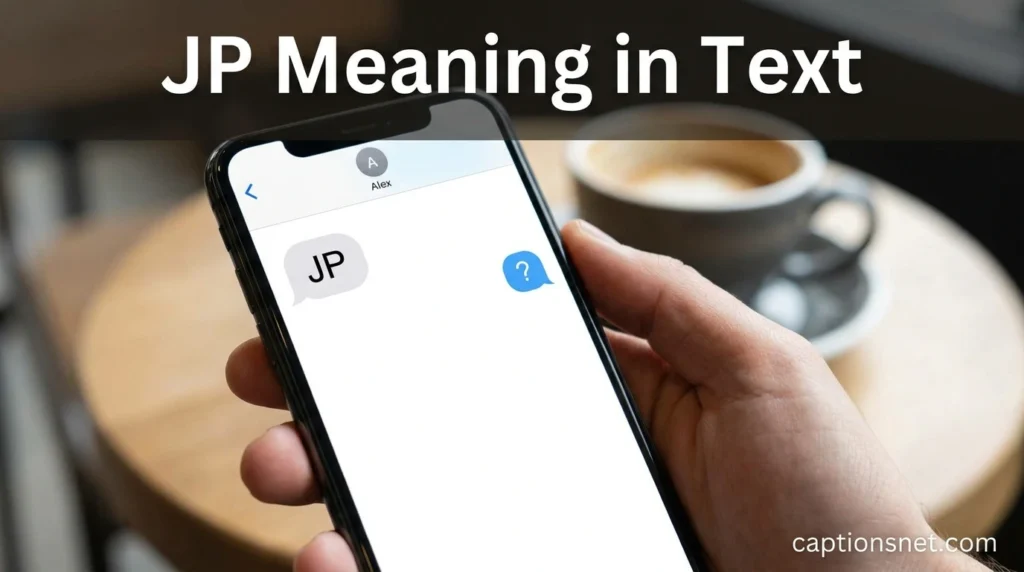
Many people see “JP” in a text message, Snapchat streak, TikTok comment, or group chat and immediately wonder what it means. Internet slang changes fast, and abbreviations often have multiple meanings depending on the platform and conversation. If you’ve come across JP in online messaging and need a quick answer, this guide explains everything in simple terms.
In texting and online conversations, JP most commonly means “Just Playing.” People use it to show that a previous comment, joke, tease, or statement was not meant to be taken seriously.
For example:
- “You’re the worst friend ever 😂 JP!”
- “I’m never talking to you again. JP lol.”
- “That movie was terrible… JP, I actually loved it.”
The abbreviation helps clarify tone in digital communication where facial expressions and voice inflections are missing. It is a popular texting slang term used across social media platforms, messaging apps, and casual online conversations.
What Does JP Mean in Text Messages?
The primary chat meaning of JP is “Just Playing.”
When someone writes JP after a statement, they are letting the other person know they are joking, teasing, or being sarcastic.
Why People Use JP
People use JP because:
- It saves typing time.
- It prevents misunderstandings.
- It adds humor to conversations.
- It makes casual texting feel more natural.
- It helps indicate sarcasm in online messaging.
Simple Example
Friend: “You owe me $1,000 for dinner.”
You: “What?!”
Friend: “JP 😂”
In this case, JP means the friend was joking.
Different Meanings of JP Across Platforms
Although “Just Playing” is the most common interpretation, JP can have different meanings depending on the platform, audience, and context.
Text Messages
In standard texting, JP usually means:
- Just Playing
- Just Joking
Example:
- “I deleted all your photos. JP!”
Snapchat Slang
On Snapchat, users often employ JP when sending playful snaps or messages.
Examples:
- “I unfriended you 😂 JP”
- “That filter looks terrible on you. JP lol”
Since Snapchat conversations are generally casual, JP is frequently used as a lighthearted social media acronym.
TikTok Meaning
On TikTok, JP may appear in comments, captions, or replies.
Examples:
- “This is the worst dance trend ever. JP.”
- “I could totally do this challenge better 😂 JP.”
TikTok users, especially younger audiences, often use abbreviations to keep comments short and engaging.
Instagram Chat Terms
In Instagram DMs and comments, JP usually indicates teasing or humor.
Examples:
- “Your vacation photos are boring. JP!”
- “I’m blocking you right now 😂 JP.”
Gaming Chats
Gamers sometimes use JP after trash talk or playful banter.
Example:
- “You’re getting kicked from the team. JP!”
Alternative Meanings
Less commonly, JP may refer to:
- A person’s initials
- Japan (country abbreviation)
- Judicial Process
- Job Position
- Jackpot
Always rely on context before deciding what JP means.
Why JP Became Popular in Online Messaging
Modern communication happens quickly. Users want fast ways to express emotions and intentions without typing full sentences.
JP became popular because it:
- Shortens communication.
- Signals humor instantly.
- Fits mobile texting habits.
- Works across multiple platforms.
- Appeals to Gen Z slang trends.
Many internet abbreviations survive because they solve communication problems. JP helps people avoid sounding rude when making jokes.
For instance:
Without JP:
- “You look ridiculous today.”
With JP:
- “You look ridiculous today 😂 JP.”
The second version clearly communicates playful intent.
Examples of JP in Real Conversations
Understanding slang becomes easier when you see it used naturally.
Example 1: Friends Chatting
Alex: “I forgot your birthday.”
Sarah: “Seriously?”
Alex: “JP! I already bought your gift.”
Example 2: Snapchat Conversation
Friend: “I posted your embarrassing photo.”
You: “No way!”
Friend: “JP 😂”
Example 3: Group Chat
Persons 1: “We’re moving the party to another city.”
Person 2: “Wait, what?”
Person 1: “JP lol.”
Example 4: Instagram DM
User: “I unfollowed you.”
Friend: “Why?”
User: “JP 😂”
Example 5: Gaming Chat
Player: “You’re banned from the squad.”
Teammate: “Seriously?”
Player: “JP, relax.”
Example 6: TikTok Comments
Comment: “This video ruined my day.”
Reply: “JP, it was hilarious.”
These texting examples show how JP functions as a quick clarification tool.
When Should You Use JP?
JP works best in casual conversations where humor and friendliness are expected.
Good Situations for Using JP
Use JP when:
- Making a joke
- Teasing a friend
- Using sarcasm
- Correcting a playful statement
- Adding humor to a conversation
Examples:
- “I’m charging you rent for sitting here. JP.”
- “You’re fired 😂 JP.”
- “I sold your car. JP!”
Benefits of Using JP
- Reduces confusion
- Makes jokes clearer
- Prevents hurt feelings
- Keeps conversations light
- Supports friendly communication
Many people appreciate the added clarity because tone can be difficult to interpret in text.
When You Should Not Use JP
Even though JP is useful, there are situations where it may not be appropriate.
Professional Conversations
Avoid JP in:
- Business emails
- Workplace messages
- Client communications
- Academic writing
Example:
Instead of:
- “You’re late on the report. JP.”
Use:
- Clear professional language.
Serious Discussions
Don’t use JP during:
- Arguments
- Emotional conversations
- Sensitive topics
- Important announcements
For example:
- Health concerns
- Family emergencies
- Financial issues
Adding JP after serious statements can seem insensitive or confusing.
With People Unfamiliar With Slang
Some people may not understand internet abbreviations.
In those situations, writing:
- “Just kidding”
- “I’m joking”
may be more effective.
Alternatives to JP in Texting
Many other abbreviations and casual texting phrases communicate a similar meaning.
JK
JK = Just Kidding
Example:
- “I stole your lunch. JK.”
JKJK
JKJK = Just Kidding, Just Kidding
Used for extra emphasis.
Example:
- “I’m deleting your account. JKJK.”
LOL
LOL = Laughing Out Loud
Example:
- “You actually believed that? LOL.”
LMAO
Used to indicate strong laughter.
Example:
- “That joke was hilarious LMAO.”
😂 Emoji
Many users replace JP entirely with emojis.
Example:
- “I quit the group 😂”
Kidding
Simply typing:
- “Just kidding”
- “Only joking”
can sometimes be clearer than abbreviations.
Common Misunderstandings About JP
Because JP has multiple interpretations, misunderstandings occasionally happen.
Mistake 1: Assuming It Always Means Just Playing
Sometimes JP may refer to:
- Japan
- A person’s name
- Initials
- A company abbreviation
Context matters.
Mistake 2: Missing the Joke
Some readers overlook the JP at the end of a message and react to the original statement.
Example:
- “I broke your phone. JP.”
If someone reads too quickly, they might panic before noticing the abbreviation.
Mistake 3: Using It Too Frequently
Overusing JP can reduce its effectiveness.
Instead of adding JP after every message, use it only when clarification is needed.
Mistake 4: Using It in Formal Settings
Internet abbreviations are generally best reserved for casual conversations.
Professional audiences may find them confusing or unprofessional.
How Gen Z Uses JP Today
Gen Z frequently uses short-form language across social media and messaging platforms.
Common traits include:
- Fast communication
- Heavy abbreviation usage
- Emoji integration
- Casual tone
- Humor-driven conversations
JP fits perfectly into these communication habits because it is:
- Short
- Easy to type
- Widely understood
- Effective at conveying humor
However, many younger users now alternate between JP, JK, emojis, and newer slang expressions depending on the platform.
Examples:
- “You’re canceled 😂 JP.”
- “Worst take ever lol JP.”
- “I can’t stand you 😭 JP.”
The abbreviation remains relevant because it solves a common problem: showing that a statement was meant as a joke.
FAQs
What does JP mean in text?
JP usually means “Just Playing.” It tells readers that a previous statement was meant as a joke or playful comment.
Is JP the same as JK?
They are very similar.
- JP = Just Playing
- JK = Just Kidding
Both indicate joking or teasing behavior.
What does JP mean on Snapchat?
On Snapchat, JP generally means “Just Playing” and is often used after a humorous or sarcastic message.
What does JP mean on TikTok?
On TikTok, JP commonly means “Just Playing” in comments, captions, and replies.
Is JP considered Gen Z slang?
Yes. JP is commonly associated with modern internet culture, texting slang, and Gen Z communication styles.
Can JP mean something other than Just Playing?
Yes. Depending on context, it may refer to:
- Japan
- Initials
- Jackpot
- Job Position
Always consider the surrounding conversation.
Should I use JP in professional emails?
No. Professional communication should generally avoid informal internet abbreviations.
Is JP still popular?
Yes. While some users prefer emojis or JK, JP remains a recognizable social media acronym in many online communities.
Conclusion
JP is a popular internet abbreviation that most often means “Just Playing.” It is used to show that a message was intended as a joke, tease, or sarcastic remark rather than a serious statement. Across text messages, Snapchat slang, TikTok meaning discussions, Instagram chat terms, and other forms of online messaging, JP helps clarify tone and prevent misunderstandings.
Whether you’re navigating texting slang, learning new social media acronyms, or trying to understand casual texting phrases used by younger generations, knowing the meaning of JP can make conversations easier to follow. Whenever you see JP at the end of a message, it’s usually a friendly signal that the sender is joking and wants to keep the conversation lighthearted and fun.